

Best water filter straws
Updated 11 Nov 2026 · How we check
We earn a commission on some links. It never changes our picks. As an Amazon Associate we earn from qualifying purchases. How we earn money
The Sawyer MINI is our top pick among filter straws. It weighs 2 oz and works four ways: as a straw, on a bottle, on its own pouch or in a hydration hose.
Cheapest: LifeStraw Personal, a plain drink-through straw for an emergency kit. Best-reviewed straw: LifeStraw Peak Series Straw. Smallest: LifeStraw Peak Series Solo.
If you filter for two, or want faster flow: the Sawyer Squeeze is the best value, the LifeStraw Peak Series Squeeze is the best rated in independent tests, the Katadyn BeFree AC is the lightest soft bottle, and the Platypus QuickDraw can be checked for damage.
None of them appears in the NSF, WQA or IAPMO certification listings. Their removal figures are the makers’ own, and none of them removes viruses.
The picks side by side
| Product | Certified for | List price | Filter life | Weight | Fits a bottle |
|---|---|---|---|---|---|
Top pick Sawyer MINI | None found | $28.99 | Up to 100,000 gal | 2 oz | 28 mm |
Cheapest LifeStraw Personal | None found | $17.95 | Up to 1,000 gal | 1.6 oz | No |
Best-reviewed straw LifeStraw Peak Straw | None found | $24.95 | Up to 1,000 gal | 2.3 oz | Some 28 mm |
Smallest LifeStraw Peak Solo | None found | $29.95 | Up to 500 gal | 1.7 oz | 28 mm |
Best for two people Sawyer Squeeze | None found | $45.99 | Up to 100,000 gal | 3 oz | 28 mm |
Top-rated in tests LifeStraw Peak Squeeze | None found | $43.95 | Up to 500 gal | 3.9 oz | 28 and 42 mm |
Lightest soft bottle Katadyn BeFree AC | None found | $52.95 | Up to 264 gal | 2.7 oz | No (42 mm) |
Can be checked for damage Platypus QuickDraw | None found | $54.95 | Up to 264 gal | 2.9 oz | Narrow-mouth |
List prices are from the maker, or from REI where noted in each product’s box, checked 11 Nov 2026. Amazon’s price can differ, so the button shows you today’s. A certification is listed only when we found it in the certifier’s own listing. Filter life is each maker’s rating. The last column shows which bottle thread the filter screws onto. Weight is the filter alone, except for the two soft bottles, where it includes the bottle. Every filter here has pores of 0.1 or 0.2 micron; the exact size is in each product’s box.
Our picks in detail
Each product is here for a stated reason, shown in the label above its name. The first four are straws and straw-size filters. The second four are squeeze filters and soft bottles, which cost and weigh a little more and move water much faster.
Straws and straw-size filters

Sawyer MINI
The lightest way to carry a filter that also screws onto a bottle, a pouch or a hydration hose.
- Filter life
- Up to 100,000 gal
- Weight
- 2 oz
- Pore size
- 0.1 micron
- List price
- $28.99
No third-party certification found in the NSF, WQA or IAPMO listings. Removal figures and the 100,000 gal rating are Sawyer's. List price and specs from sawyer.com, checked 11 Nov 2026. Amazon’s price may differ.
The MINI suits most people who want one small filter for hiking, travel and the emergency bag. It is a 0.1 micron hollow fiber filter: water is pushed through bundles of tiny tubes whose walls stop bacteria and protozoa such as Giardia. Sawyer says it removes 99.99999% of bacteria and 99.9999% of protozoa and rates it for up to 100,000 gallons. Those are Sawyer’s own figures. We have not tested them.
What sets it apart from a plain straw is the 28 mm thread. You can drink through it like a straw, screw it onto the included 16 oz pouch or onto a standard disposable water bottle, or fit it into the hose of a hydration pack.
Its weakness is flow. In independent field tests the MINI comes out light, versatile and good value, but hard to squeeze and quick to clog in cloudy water, and its pouch can burst at the seam if you squeeze hard. Squeezing a liter through it takes about two minutes. Sawyer itself says flow depends on how clean the filter is, so expect to backwash it often.
We keep it first because it is the least expensive filter here that does all four jobs, and its life rating is the highest in this guide. If you would trade an ounce and a few dollars for faster flow, look at the Sawyer Squeeze or the soft bottles below.
- Weighs 2 oz
- Fits 28 mm bottle threads and hydration hoses
- Rated by Sawyer for up to 100,000 gal
- No third-party certification found
- Hard to squeeze and quick to clog in cloudy water, in independent tests
- Must not freeze
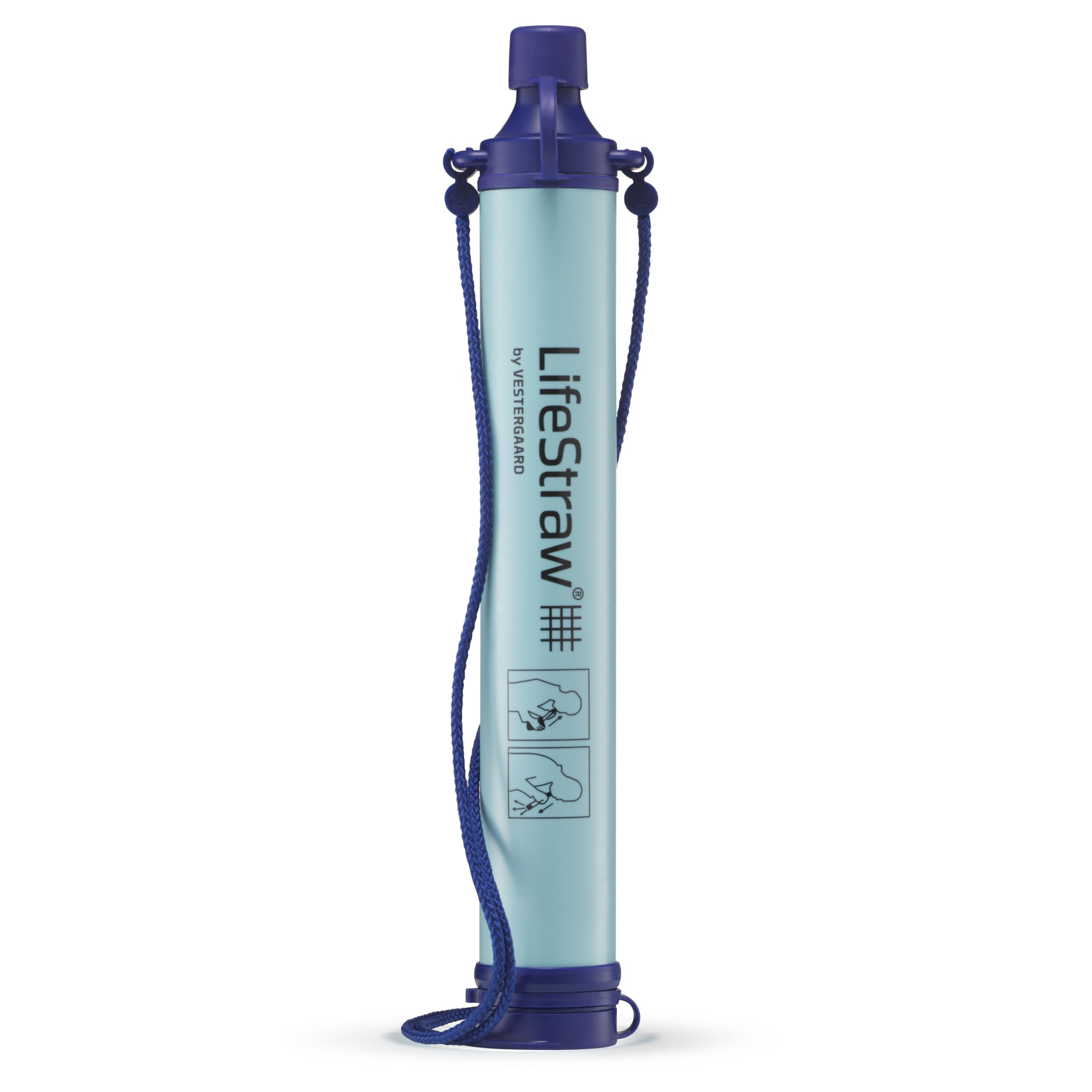
LifeStraw Personal
The cheapest filter here and the simplest: a straw you drink through, with nothing to assemble.
- Filter life
- Up to 1,000 gal
- Weight
- 1.6 oz
- Pore size
- 0.2 micron
- List price
- $17.95
No third-party certification found in the NSF, WQA or IAPMO listings. Lifetime and lab test claims are LifeStraw's. List price and specs from lifestraw.com, checked 11 Nov 2026. Amazon’s price may differ.
The LifeStraw is the simplest filter in this guide and the one with the lowest list price. There is nothing to assemble: you put one end in the water and drink from the other. That makes it a sensible choice for an emergency kit or a glove box, where it may sit unused for years. LifeStraw says it has an unlimited shelf life while unused and lasts for up to 1,000 gallons, after which water stops passing through.
The limits are just as plain. You cannot use it to fill a bottle or a cooking pot, so you can only drink where the water is. It takes real suction: adults manage with some effort, and young children may not be able to use it at all. Its pores are 0.2 micron, against 0.1 for the Sawyer filters.
LifeStraw says the straw meets the US EPA and NSF P231 standards for removing bacteria and parasites. We did not find the straw in a certifier’s listing, so we report that as LifeStraw’s claim.
- Lowest list price
- Weighs 1.6 oz
- Nothing to set up
- No third-party certification found
- Cannot fill a bottle or pot
- Needs strong suction, too much for young children

LifeStraw Peak Series Straw
The updated LifeStraw: drink through it like the original, or thread it onto a bottle or a gravity hose, and backflush it when it slows.
- Filter life
- Up to 1,000 gal
- Weight
- 2.3 oz
- Pore size
- 0.2 micron
- List price
- $24.95
No third-party certification found in the NSF, WQA or IAPMO listings. Removal, lifetime and lab test claims are LifeStraw's. List price and specs from lifestraw.com, checked 11 Nov 2026. Amazon’s price may differ.
This is LifeStraw’s redesign of the original straw, and in the independent tests we read it is the straw that comes out best: recommended for solo hikers and as a backup filter.
It does three things the original cannot. The bottom end has a thread that fits some single-use water bottles, the bottom cap comes off so it can sit in a standard gravity hose, and it can be backflushed when sand and silt slow it down. LifeStraw rates it for up to 1,000 gallons and says it has an unlimited shelf life while unused.
The drawbacks testers report are the ones you would expect from a straw: the suction is tiring and silt clogs it, and some REI buyers could not attach it to their bottles. It is also hard to buy: when we checked on 12 Nov 2026 it was out of stock at LifeStraw and unavailable at REI. (REI product page)
- Comes out as the best straw filter in independent 2026 tests
- Works as a straw, on a bottle or on a gravity hose
- Rated by LifeStraw for up to 1,000 gal
- No third-party certification found
- Hard to find: out of stock at LifeStraw on 11 Nov 2026
- Suction is tiring and silt clogs it, in independent tests
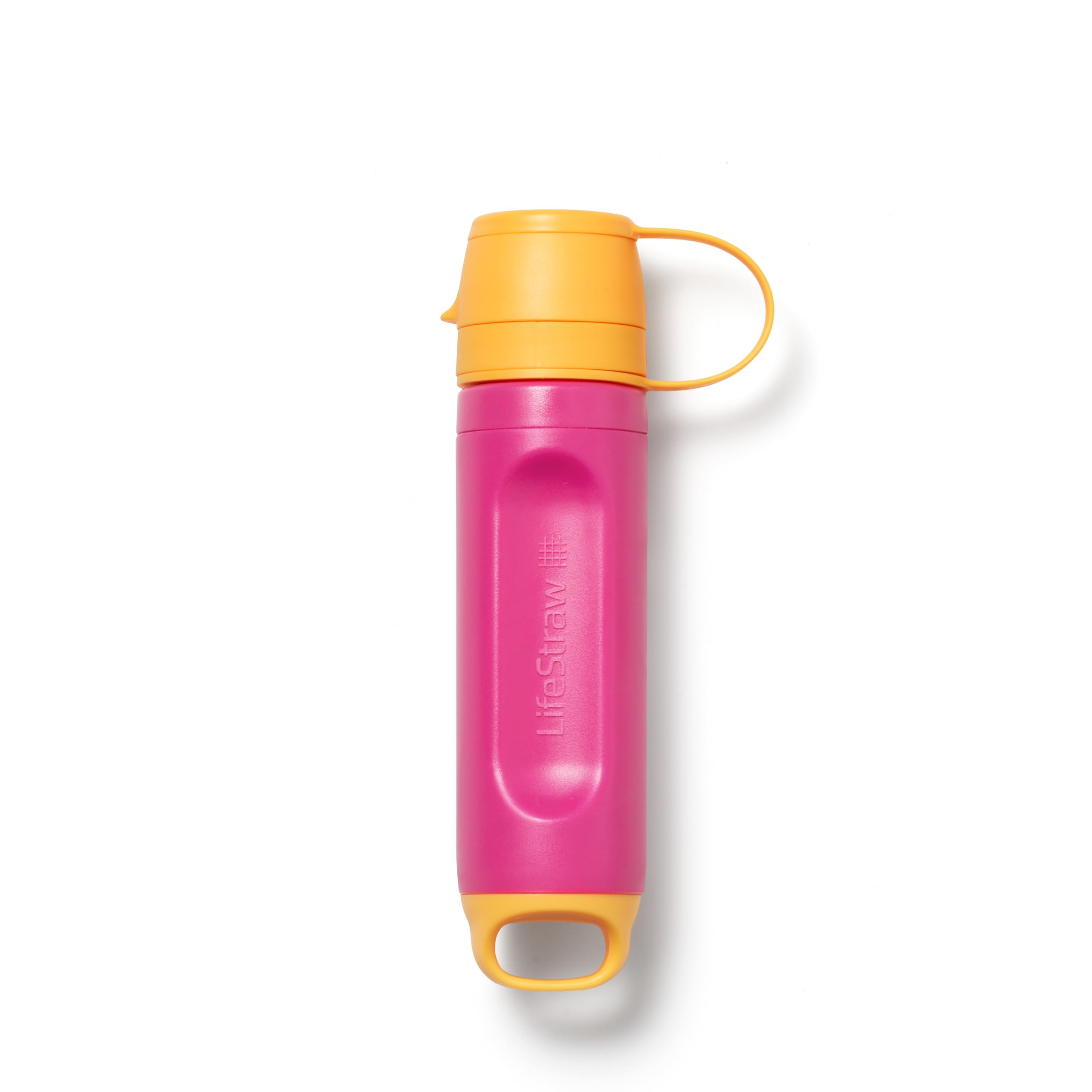
LifeStraw Peak Series Solo
The smallest filter in this guide: it screws onto a standard 28 mm bottle and is about half the length of the Peak Series Straw.
- Filter life
- Up to 500 gal
- Weight
- 1.7 oz
- Pore size
- 0.2 micron
- List price
- $29.95
No third-party certification found in the NSF, WQA or IAPMO listings. Flow, removal and lifetime figures are LifeStraw's. List price and specs from lifestraw.com, checked 11 Nov 2026. Amazon’s price may differ.
The Solo is a Peak Series filter cut down to pocket size: 5.1 inches long and 1.7 oz. It screws onto a standard 28 mm bottle, so a disposable water bottle becomes your squeeze bottle. LifeStraw says it passes 3 liters a minute and fills a 1-liter bottle in about 20 seconds. We found no published measurement of its flow.
Independent reviewers describe it as simple, small and light with good flow. They also note that it is too short to drink from a stream, so it always needs a bottle, and that it works best with two bottles, one for dirty water and one for clean. Its life rating of 500 gallons is half that of the Peak Series Straw.
It comes with leak-proof caps for both ends and a backwash syringe. LifeStraw’s own page carries buyer reports that it does not fit certain Poland Spring bottles, so check the thread on the bottle you plan to use.
- Weighs 1.7 oz and is 5.1 in long
- Threads onto standard 28 mm bottles
- Backwash syringe and leak-proof caps included
- No third-party certification found
- Too short to drink from a stream, so it needs a bottle
- Rated for 500 gal, half the life of the Peak Series Straw
Squeeze filters and soft bottles

Sawyer Squeeze
The same filter technology as the MINI in a larger body, with two 32 oz pouches for filling bottles and cooking water.
- Filter life
- Up to 100,000 gal
- Weight
- 3 oz
- Pore size
- 0.1 micron
- List price
- $45.99
No third-party certification found in the NSF, WQA or IAPMO listings. Removal figures and the 100,000 gal rating are Sawyer's. List price and specs from sawyer.com, checked 11 Nov 2026. Amazon’s price may differ.
Choose the Squeeze over the MINI if you filter more than a bottle at a time: water for two people, or for cooking at camp. It uses the same 0.1 micron hollow fiber technology in a body twice as wide, and it comes with two 32 oz pouches. In independent tests it is a regular first choice and a best-value pick for small groups, and a liter takes 40 to 50 seconds.
It fits the same 28 mm bottle threads as the MINI. The price of the extra speed is an ounce more weight, a bulkier filter and more small parts to keep track of: Sawyer lists the full retail kit at 8.19 oz. Testers also find the filter awkward to drink from directly.
Sawyer’s FAQ rates its 0.1 micron filters for 100,000 gallons and says they have no defined end of life. It also says the pouches take about 7 PSI before they burst and are not covered by the warranty, so squeeze firmly but do not wring them. (Sawyer FAQs)
- Rated best value for small groups in independent tests
- Two 32 oz pouches included
- Fits 28 mm bottle threads
- No third-party certification found
- Several small parts to keep track of
- Must not freeze

LifeStraw Peak Series Squeeze 1 L
A 1-liter soft bottle with the Peak Series filter inside, and the best-rated personal filter in the independent 2026 tests we read.
- Filter life
- Up to 500 gal
- Weight
- 3.9 oz with bottle
- Pore size
- 0.2 micron
- List price
- $43.95
No third-party certification found in the NSF, WQA or IAPMO listings. Removal and lifetime figures are LifeStraw's. List price and specs from lifestraw.com, checked 11 Nov 2026. Amazon’s price may differ.
This is the same Peak Series filter fitted inside a 1-liter soft bottle, and it is the best-rated personal filter in the independent 2026 tests we read. In that testing a liter took about 30 seconds.
You can drink from the bottle, squeeze clean water into a pot or another bottle, or pull the filter out and use it as a straw. Reviewers note that the filter fits both 28 mm and 42 mm openings, so it also works on other bottles.
The cost testers agree on: the filter needs backflushing often to keep its flow. LifeStraw rates it for up to 500 gallons.
- Best-rated personal filter in independent 2026 tests
- Works as a bottle, a squeeze filter or a straw
- A liter in about 30 seconds in independent timing
- No third-party certification found
- Needs regular backflushing
- Rated for 500 gal
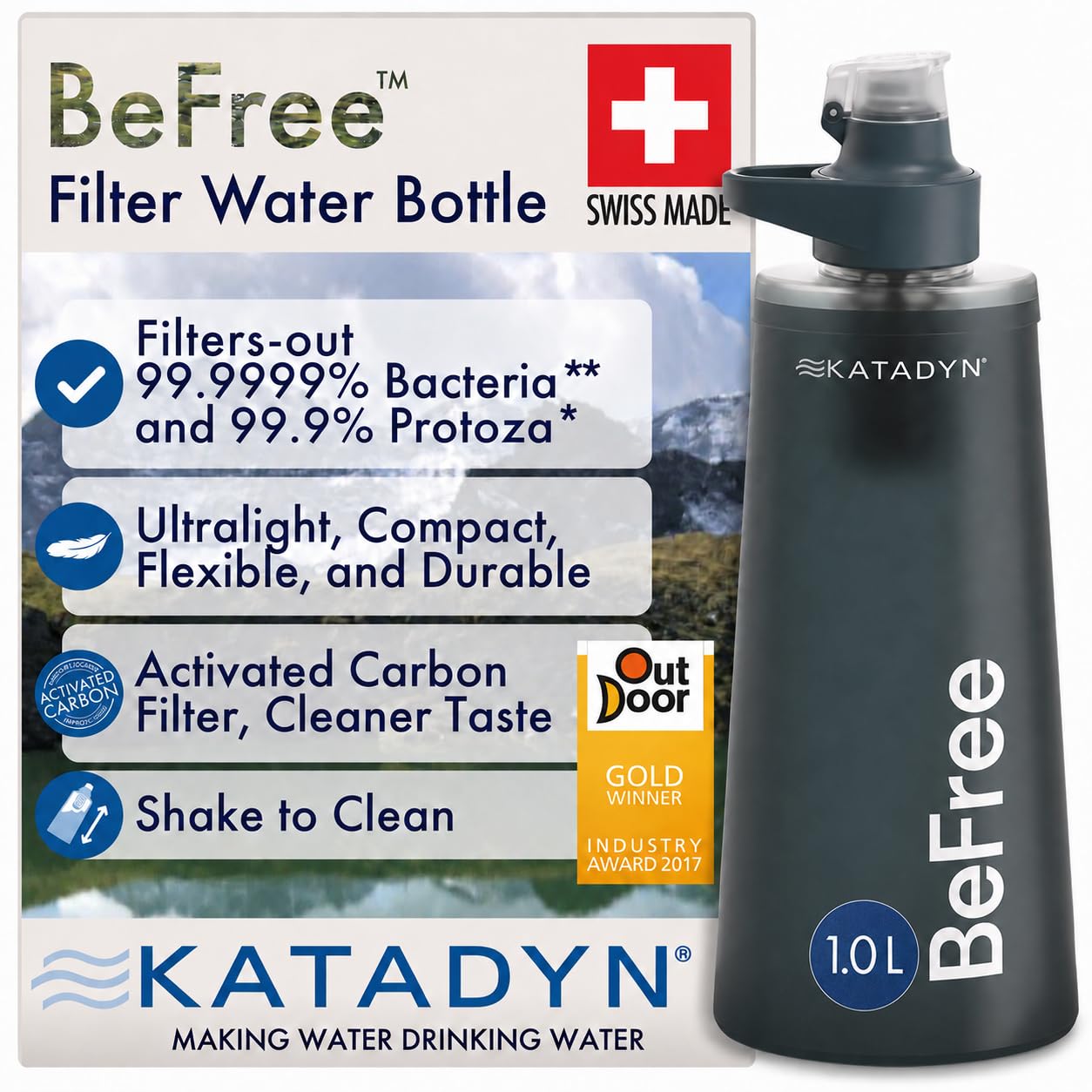
Katadyn BeFree AC 1.0L
A 1-liter soft bottle with the filter in the cap: fill, squeeze and drink, and clean it by shaking.
- Filter life
- Up to 264 gal
- Weight
- 2.7 oz
- Pore size
- 0.1 micron
- List price
- $52.95
No third-party certification found in the NSF, WQA or IAPMO listings. Capacity and flow figures are Katadyn's. Specs from Katadyn's fact sheet, list price from REI, checked 11 Nov 2026. Amazon’s price may differ.
The BeFree is a 1-liter soft flask with the filter in the cap: fill it, squeeze and drink. It is the lightest soft bottle here and a regular pick for ultralight use in independent tests, where it was also the quickest of the filters in this guide at about 25 seconds a liter.
The AC model is the current version. It adds a small activated carbon stage that you can fit to improve the taste of chlorinated tap water or leave out at a clear stream. Katadyn has withdrawn the earlier BeFree 1.0L and names this model as its replacement. Cleaning needs no tools: you shake or swish the filter in clean water.
What you give up is life and compatibility. Katadyn rates the hollow fiber filter for up to 1,000 liters and the carbon stage for up to 200, both depending on water quality, and its 42 mm thread does not fit ordinary drink bottles. Testers also find that it clogs in silty water.
- Lightest soft bottle here, a regular ultralight pick in independent tests
- A liter in about 25 seconds in independent timing
- Cleans by shaking, with no syringe
- No third-party certification found
- Rated for 1,000 liters, far less than the Sawyer filters
- Its 42 mm thread does not fit ordinary drink bottles

Platypus QuickDraw 1 L system
A fast squeeze filter with a 1-liter reservoir, and the only pick with a field check that shows whether a drop or a freeze has damaged it.
- Filter life
- Up to 264 gal
- Weight
- 2.9 oz filter only
- Pore size
- 0.2 micron
- List price
- $54.95
No third-party certification found in the NSF, WQA or IAPMO listings. Flow and removal figures are Platypus's, as listed by REI. List price and specs from REI's product page, checked 11 Nov 2026. Amazon’s price may differ.
The QuickDraw is a squeeze filter with its own 1-liter reservoir. It is the only filter in this guide with an integrity check, a short test you can do on the trail to find out whether a drop or a night below freezing has damaged the fibers. With every other filter here, the advice after a freeze is to replace it and hope you guessed right. (REI product page)
It is also quick. Platypus claims up to 3 liters a minute when squeezed, and independent timings put a liter at 27 to 40 seconds. It cleans by shaking or by backflushing, with no syringe to carry.
Its limits: Platypus rates the cartridge for about 1,000 liters, and in independent tests it does poorly in murky water and is not the tool for a group.
- Integrity check for drop or freeze damage
- A liter in about 27 seconds in independent timing
- Cleans by shaking or backflushing, with no syringe
- No third-party certification found
- Rated for 1,000 liters
- Does poorly in murky water, in independent tests
Also consider
Sits between the MINI and the Squeeze: Sawyer gives it the MINI's 2 oz field weight and a 32 oz pouch. No third-party certification found. List price $33.99 at sawyer.com, checked 11 Nov 2026. Read our review
How big they are
Product photos rarely show scale, so we drew six of the filters next to a 12 oz drink can, using the dimensions each maker or REI publishes. The two soft bottles are left out because their size depends on how full they are.
Four ways to use the Sawyer MINI
What comes in the Sawyer MINI package
How to choose a filter straw
If you hike or backpack
Pick a filter with a bottle thread. A plain straw only lets you drink where the water is. A threaded filter lets you fill a bottle at the stream and carry filtered water with you. For one person the Sawyer MINI or the LifeStraw Peak Series Solo is enough. For two people, or if you also filter cooking water, the faster squeeze filters earn their extra ounce.
If it is for an emergency kit
Simplicity and shelf life matter more than flow. The LifeStraw has no parts to lose, and LifeStraw says an unused straw keeps indefinitely. If you want to treat water for a family, the Sawyer Squeeze with its two pouches is the more practical tool. Keep a way to disinfect as well: see the question on boil water notices below.
If you travel where tap water is unsafe
Be careful here. These are filters, not purifiers. The CDC says a filter with pores of 0.3 micron or smaller removes bacteria and parasites but not viruses, and advises filtering first and then disinfecting. Chlorine dioxide tablets kill bacteria and viruses and can kill Giardia. Where viruses are a risk, add them after filtering, or look at the purifier bottles in our filtered water bottle guide. (CDC, reviewed Jan 2025)
REI’s advice for hikers runs the same way: protozoa and bacteria are the main concern in the US and Canada, which a filter handles, and a purifier is for travel to less-developed areas where viruses are a risk. (REI Expert Advice)
What a filter straw will not do
The makers of these filters claim removal of bacteria, protozoa and microplastics. They do not claim to remove dissolved chemicals, heavy metals or salt, so a straw is the wrong tool for lead in tap water or for seawater. The CDC adds that neither boiling nor disinfecting makes water safe when it holds harmful chemicals or toxins. (CDC)
Straw, bottle or gravity filter?
A straw is the lightest and cheapest way to make stream water drinkable, and the most limited. This is how it compares with the other portable types, following REI’s summary of each.
| Type | Best for | Limits |
|---|---|---|
| Straw | One person, drinking at the source. Backup and emergency kits. | Water only where you find it. Hard work to drink through. Not for groups. |
| Squeeze filter | One or two people who want to fill bottles and carry clean water. Many also work as a straw or a gravity filter. | Volume is limited by the pouch. Pouches and small parts wear or get lost. |
| Filter bottle | Travel and day use: fill, then drink or press. Some are purifiers that also deal with viruses. | Only a bottle’s worth at a time. Heavier than a straw or squeeze filter. |
| Gravity filter | Groups and base camps. Hang the bag and let it run, no pumping or squeezing. | Bulkier and dearer. Needs somewhere to hang. Hard to fill from shallow water. |
Source: REI Expert Advice.
Many of the filters in this guide cross these lines. The Sawyer filters, the Peak Series Straw and the QuickDraw can all be set up as a gravity filter with a bag or hose, and the two soft bottles here are squeeze filters you can also drink from.
If you want a bottle, see our filtered water bottle guide. Our gravity filter guide covers the larger countertop units people keep at home or at a cabin, which work on the same principle as a camp gravity bag and hold far more water.
How to use a filter straw
- Flush a new Sawyer filter before the first trip. Sawyer tells owners to backwash before first use and again after storage, to wet the fibers and restore the flow. (Sawyer FAQs)
- Choose the clearest water you can reach. Sediment is what clogs these filters. If the water is cloudy, let it settle and take the clear part, or pour it through a clean cloth or coffee filter first. (CDC; REI)
- Keep dirty and clean apart. Use one container for untreated water and another for filtered water, and do not let the dirty side touch the end you drink from. REI also suggests carrying hand sanitizer. (REI)
- Squeeze firmly, not hard. Sawyer says its pouches take about 7 PSI before they burst, and testers have split the MINI’s pouch at the seam by squeezing hard. Roll the pouch from the bottom, or screw the filter onto a sturdier bottle. (Sawyer FAQs)
- Do not let it freeze once wet. In cold weather carry the filter close to your body and keep it in your sleeping bag at night. (Sawyer FAQs; REI)
- Where viruses are possible, disinfect after filtering. The CDC’s advice is to filter first and then disinfect. (CDC)
Cleaning and storage
Every filter here slows down as it fills with what it has removed. How you restore the flow depends on the maker, so follow the instructions for your model. These are the makers’ own.
Sawyer MINI, Squeeze and Micro Squeeze
Backwash with the included syringe: take the cap off the drinking end, fill the syringe with clean water, press it against the drinking end and push the water through hard, against the normal direction of flow. Repeat until it runs clear and easily. Sawyer says to be forceful, and that a good backwash can restore up to 98% of the original flow. How often depends on the water: roughly every 1,000 gallons in clear water and every 10 gallons in muddy water.
Before storing, backwash, then sanitize by backwashing with one capful of fragrance-free bleach in a liter of water, let the filter dry and keep it somewhere that stays above freezing. A filter put away dirty can usually be recovered by soaking it in hot water and backwashing it hard. (Sawyer, updated Oct 2025; Sawyer FAQs)
LifeStraw Personal, Peak Series Straw, Solo and Squeeze
For the original straw, LifeStraw’s instructions are to disinfect it with a quarter teaspoon of household bleach in two cups of clean water, left in the straw for five minutes, and then to rinse it under clean tap water for a minute. For storage after use it describes a salt solution, one teaspoon of salt in two cups of clean water, to stop the membrane drying out, and says to blow the solution out and check the flow before the next use. An unused straw needs only a cool, dry place.
The Peak Series filters can be backflushed, and the Solo and the Squeeze come with a backwash tool. LifeStraw publishes a separate storage procedure for them, also aimed at keeping the membrane from drying out. Follow the guide that comes with the filter. (LifeStraw; LifeStraw, Peak Series Solo)
Katadyn BeFree AC and Platypus QuickDraw
Neither needs a syringe. Katadyn says to shake or swish the BeFree filter in clean water, with no backflushing or tools. The QuickDraw has two methods, shaking it clean and backflushing, and comes with the washer for the second. (Katadyn fact sheet; REI product page)
How we check
We research every product in depth before it goes on this page. That means reading the maker’s specifications and care instructions, searching the NSF, WQA and IAPMO certification listings, going through published results from independent field and lab tests, and reading what buyers report after using the product. We do not run a lab of our own, and we say so. More on how we check.
We list a product when we can state a specific reason for it. We leave a product out when we cannot confirm a claim it depends on. When a maker’s claim has no certification behind it, we say whose claim it is, and every price and spec carries the date we checked it.
We show a list price and not Amazon’s because Amazon only allows its prices on other sites through its own data feed. The button takes you to the live price.
Common questions
Do water filter straws remove viruses?
No. The filters in this guide have pores of 0.1 or 0.2 micron. The CDC says filters of that size remove bacteria and parasites but not viruses. Where viruses are a concern, disinfect the filtered water or use a purifier. (CDC)
How long does a filter straw last?
It depends on the maker’s rating and on how dirty the water is. Sawyer rates its filters for up to 100,000 gallons, LifeStraw rates its straws for 500 to 1,000 gallons, and Katadyn and Platypus rate theirs for about 1,000 liters, which is 264 gallons. These are the makers’ figures, not ours.
How do I know when the filter is finished?
LifeStraw says its filters stop letting water through at the end of their life. Sawyer says its filters have no defined end of life and should be replaced if they have been frozen, boiled or dropped. For the others, go by the maker’s liter rating and by a flow that cleaning no longer restores. (LifeStraw; Sawyer FAQs)
Are filter straws certified by NSF?
We did not find any of the filters in this guide in the NSF, WQA or IAPMO listings on 11 Nov 2026. LifeStraw says its filters meet the US EPA and NSF P231 standards for bacteria and parasites, and Platypus says the QuickDraw is tested to EPA and NSF guidelines. A maker saying a product meets a standard is not the same as a certifier listing it, which is why we report these as the makers’ claims.
Why is the Membrane Solutions straw not on this list?
Its Amazon listing describes it as NSF certified to standards 42, 372 and 401. We searched the NSF, WQA and IAPMO listings on 11 Nov 2026 and did not find it. We only list a certification we can confirm, so we have left the product out until we can.
Can I use a filter straw on tap water at home?
You can, but it is rarely the right tool. These filters are built for bacteria and protozoa in outdoor water. Sawyer says its filters do not remove chemicals or heavy metals and that tastes and odors pass through. If your concern is lead, chlorine or PFAS, look at a certified pitcher or under-sink filter. (Sawyer FAQs)
Can I use one during a boil water notice or after a flood?
Follow your health department first. The CDC calls boiling the best way to kill germs in water: one minute at a rolling boil, three minutes above 6,500 feet. If you cannot boil, it advises filtering and then adding a disinfectant, because portable filters do not remove viruses. No filter here makes water safe if it contains fuel or toxic chemicals, which is common in flood water. (CDC)
Will a filter straw make salt water drinkable?
No. LifeStraw says its filters are for fresh water only, not sea or brackish water, and Sawyer says its filters do not remove salt. (LifeStraw; Sawyer FAQs)
What happens if my filter freezes?
A hollow fiber filter that has been wet can be damaged by freezing, and the damage does not show. Sawyer says a filter that has never been wetted is safe from freezing, recommends replacing one you suspect has frozen and gives no warranty for a frozen filter. In cold weather keep the filter in a pocket by day and in your sleeping bag at night. The Platypus QuickDraw is the one filter here with a check for this kind of damage. (Sawyer; REI)
Can children use a filter straw?
Drinking through a straw filter takes strong suction, and young children often cannot manage it. For children, squeeze the water through a threaded filter into a cup or bottle instead.
Can I connect one to a hydration pack?
Some. Sawyer says the standard MINI has barbs on both ends and fits into a drinking hose without an adapter, while the Squeeze and Micro Squeeze need adapters. LifeStraw says the Peak Series Straw fits standard gravity hoses once its bottom cap is removed. (Sawyer FAQs; LifeStraw)
Do they improve the taste of water?
Mostly no. A hollow fiber filter takes out particles and cloudiness, but Sawyer says dissolved tastes, colors and odors pass through. The Katadyn BeFree AC is the exception here: its carbon stage is there to improve taste and reduce chlorine. (Sawyer FAQs; Katadyn)
Sources
Makers, certifiers, public health bodies and retailers’ specification pages, all read on 11 Nov 2026. Dates after a title are the page’s own.
- CDC, Water treatment options when hiking, camping, or traveling, reviewed 30 Jan 2025
- CDC, How to make water safe in an emergency, 19 Sep 2024
- REI Expert Advice, How to choose a water filter or purifier
- Sawyer, MINI product page
- Sawyer, Squeeze product page
- Sawyer, Micro Squeeze product page
- Sawyer, water filtration FAQs
- Sawyer, backwashing and storage instructions, updated 21 Oct 2025
- LifeStraw, personal water filter straw product page
- LifeStraw, Peak Series Straw product page
- LifeStraw, Peak Series Solo product page
- LifeStraw, Peak Series squeeze bottle 1 L product page
- Katadyn, BeFree Filter AC 1.0L fact sheet, 9 Oct 2025
- Katadyn, BeFree 1L product page (previous model)
- REI, Katadyn BeFree AC 1.0 L product page
- REI, Platypus QuickDraw Filter System 1 Liter product page
- REI, Platypus QuickDraw Filter product page
- REI, LifeStraw Peak Series Water Filter Straw product page
- NSF, certified drinking water treatment units listing
- WQA, certified product listings
- IAPMO R&T, product listing directory